
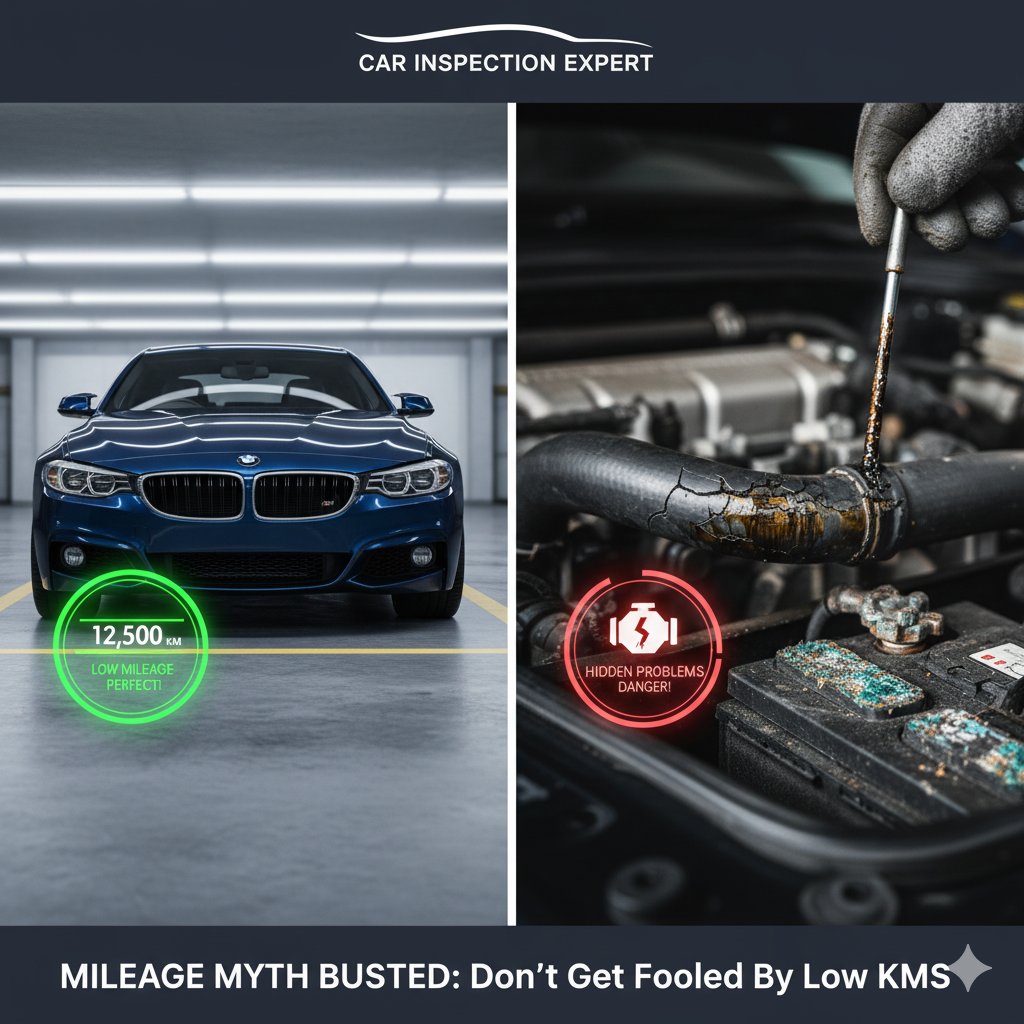
Introduction: The Allure of Low Kilometres
When searching for a used car, the first thing most buyers check, right after the price, is the odometer reading. A low number of kilometres (KMs) on the display often feels like hitting the jackpot – a sign of a gently used car with plenty of life left. The assumption is simple: low mileage cars are always better cars.
However, this is one of the biggest used car myths. While a high-mileage car certainly comes with its own set of concerns, a surprisingly low odometer reading can, paradoxically, hide a multitude of costly problems. At Car Inspection Expert, we’re here to bust the mileage myth and explain why low KMs don’t always mean a better car. Don’t let the odometer fool you!
Why Low KMs Can Be Misleading: The Hidden Dangers
Here’s why chasing only low mileage cars can lead to disappointment and expensive repairs:
1. The “Weekend Warrior” Car: Infrequent Short Trips (H3)
-
The Problem: A car driven only for short, infrequent trips (e.g., grocery runs, short commutes) often suffers more wear than a car regularly driven on highways.
-
Impact: Short trips don’t allow the engine to reach optimal operating temperature, leading to:
-
Engine Sludge Build-up: Condensation and unburnt fuel contaminate the oil, forming harmful sludge.
-
Battery Degradation: Constant short starts without full charging cycles shorten battery life.
-
Increased Wear: Engine components wear more during cold starts.
-
2. The “Garage Queen”: Long Periods of Inactivity (H3)
-
The Problem: Cars that sit for extended periods (months or years) without being driven.
-
Impact: Inactivity is a silent killer for many components:
-
Rubber & Plastic Degradation: Hoses, belts, seals, and tires dry out, crack, and become brittle. This includes crucial engine seals and suspension bushings.
-
Fluid Contamination: Brake fluid absorbs moisture, engine oil settles and loses lubrication properties.
-
Battery Drain: Batteries constantly discharge and often die prematurely.
-
Rust Formation: Moisture can settle and cause rust in brake calipers, exhaust, and even internal engine parts.
-
3. Neglected Maintenance Despite Low Use (H3)
-
The Problem: Owners of low mileage cars often mistakenly believe their car doesn’t need regular maintenance because it’s not driven much.
-
Impact: Maintenance is time-based, not just mileage-based. Ignoring annual services leads to:
-
Old Fluids: Engine oil, brake fluid, coolant, and transmission fluid have service intervals often based on time (e.g., “every 1 year or 10,000 KMs, whichever comes first”). Old fluids lose effectiveness.
-
Sticking Components: Seldom-used components like brake calipers, AC compressors, and power steering pumps can seize or develop leaks.
-
4. Odometer Rollback: The Deceptive Practice (H3)
-
The Problem: This is outright fraud where a seller illegally reduces the odometer reading to make the car appear less used and command a higher price.
-
Impact: You pay a premium for a car that has significantly more wear and tear than advertised. This is a common risk in the used car market. Our ECU verification (as discussed in our PDI checklist) is crucial here.
5. Age-Related Wear (Regardless of Kilometres) (H3)
-
The Problem: Certain components degrade simply due to age and exposure to elements, irrespective of how much the car is driven.
-
Impact:
-
Wiring Insulation: Becomes brittle.
-
Plastic Connectors: Crack and break easily.
-
Headlight Haze: UV damage causes headlights to yellow and become cloudy.
-
Suspension Bushings: Rubber components in the suspension harden and crack over time.
-
What to Inspect Beyond the Odometer: The Smart Buyer’s Checklist
To truly assess a used car, look beyond the KMs. Here’s what our experts at Car Inspection Expert always check:
-
Service Records: Demand complete and consistent service history. Look for regular oil changes, fluid flushes, and scheduled maintenance performed on time, not just on mileage.
-
Tire Age & Wear: Check the tire DOT code for the manufacturing date. Uneven wear can indicate suspension or alignment issues, regardless of KMs.
-
Rubber Components: Inspect all belts, hoses, and seals for cracks, brittleness, or leaks. Pay close attention to suspension bushings.
-
Fluid Condition: Check the color and smell of engine oil, transmission fluid, and brake fluid. Dark, sludgy oil or contaminated fluids are red flags.
-
Battery Health: Perform a battery load test to check its actual capacity, not just voltage.
-
Interior Wear: Look for wear on seats, pedals, steering wheel, and gear shifter that contradicts the low odometer reading. This could be a sign of odometer fraud.
-
Undercarriage & Exhaust: Inspect for excessive rust, especially if the car has been sitting for long periods or in humid conditions.
-
Driving Dynamics: Does the car feel smooth? Are there any unusual noises, vibrations, or pulling during a test drive?
Conclusion: Don’t Fall for the Low Mileage Trap
The myth that low KMs always mean a better car is a dangerous one for used car buyers. While mileage is a factor, it’s just one piece of a much larger puzzle. A well-maintained car with moderate kilometres can often be a far better buy than a neglected “garage queen” with very low KMs.
At Car Inspection Expert, our comprehensive used car inspection focuses on the car’s overall condition, maintenance history, and true mechanical health, not just the number on the odometer.
Make an informed decision, not an assumption. Schedule your expert inspection today and buy a truly reliable used car, regardless of its mileage!